Every project needs experts. But whose experts?
You’ll often hear the term “client-side project team.” It’s agroup of professionals hired by the Client (aka the Principalor Project Owner) to look after their interests across the life ofthe project.
The term “client-side” matters because many roles exist on bothsides of the fence, i.e. the “builder-side”. A HeadContractor may have their own project manager. So does the Client.That’s why you’ll often hear the distinction: “client-sideproject manager.”
We go into this in a bit more detail below.
The client-side project team can be divided into three types: design,regulatory and management.
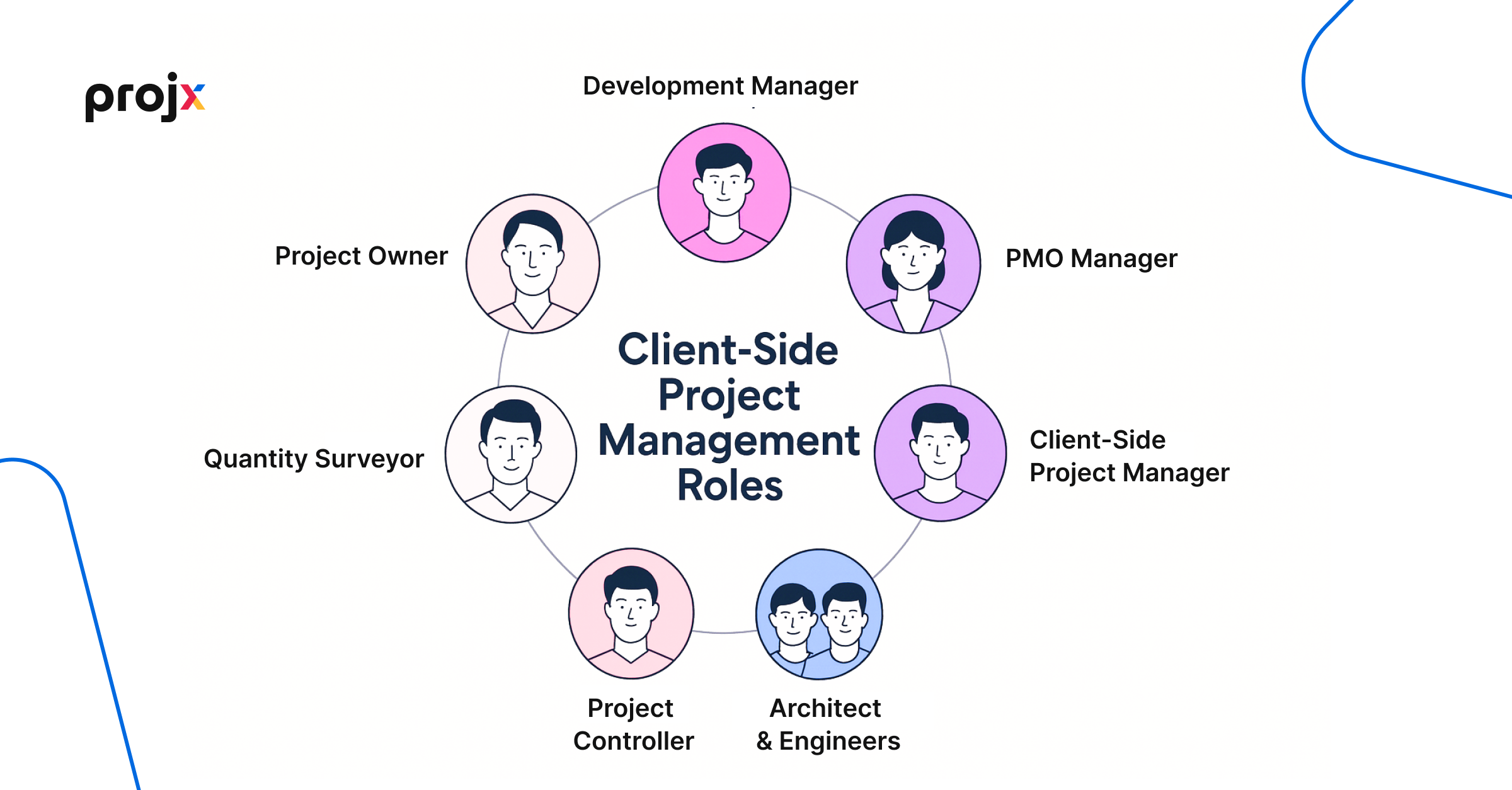
This depends on the project, but most client-side teams include thesekey players:
The client-side PM is the conductor of the orchestra. Theycoordinate consultants, oversee timelines and budgets, and make surethe Client’s objectives are achieved.
The QS keeps the numbers honest. They build budgets, evaluatetenders, track costs, and advise on savings - making sure decisionsare grounded in financial reality.
Architects, engineers, and specialist designers collaborate closelywith the Client to translate vision into drawings and specs. Theyensure the project’s design is functional, compliant, and alignedwith what the Client actually wants.
Planning consultants navigate regulations, zoning, and permits. Theyliaise with councils and planning authorities so the project clearsstatutory hurdles.
Contracts, risks, and disputes need expert eyes. Client-side legaladvisors review agreements, negotiate terms, and help protect theClient from any surprises.
Depending on the project, the team may also include sustainabilityexperts, financial advisors, marketing consultants, or buildingsurveyors.
Together, these consultants make up the client’s consulting team:advising, coordinating, managing risks, and helping projects movefrom concept to completion without losing sight of the Client’sobjectives.
So where does the Superintendent sit?
Even though the Client pays them, the Superintendent isn’tconsidered a client-side consultant. Their role is independent andimpartial - administering the contract fairly, not protecting theClient’s interests. Think of them as the referee, not part of theteam.
Building surveyor fall into a similar category to Superintendents.They’re engaged by the Client but regulated by statue and buildingcodes.
In Design & Construct contracts, some design consultantsare “novated” from the Client to the Contractor. At this point,they’re no longer part of the client-side team.
But most other client-side consultants: PMs, QSs, building surveyors,legal advisors - don’t move. They stay firmly in the Client’scorner
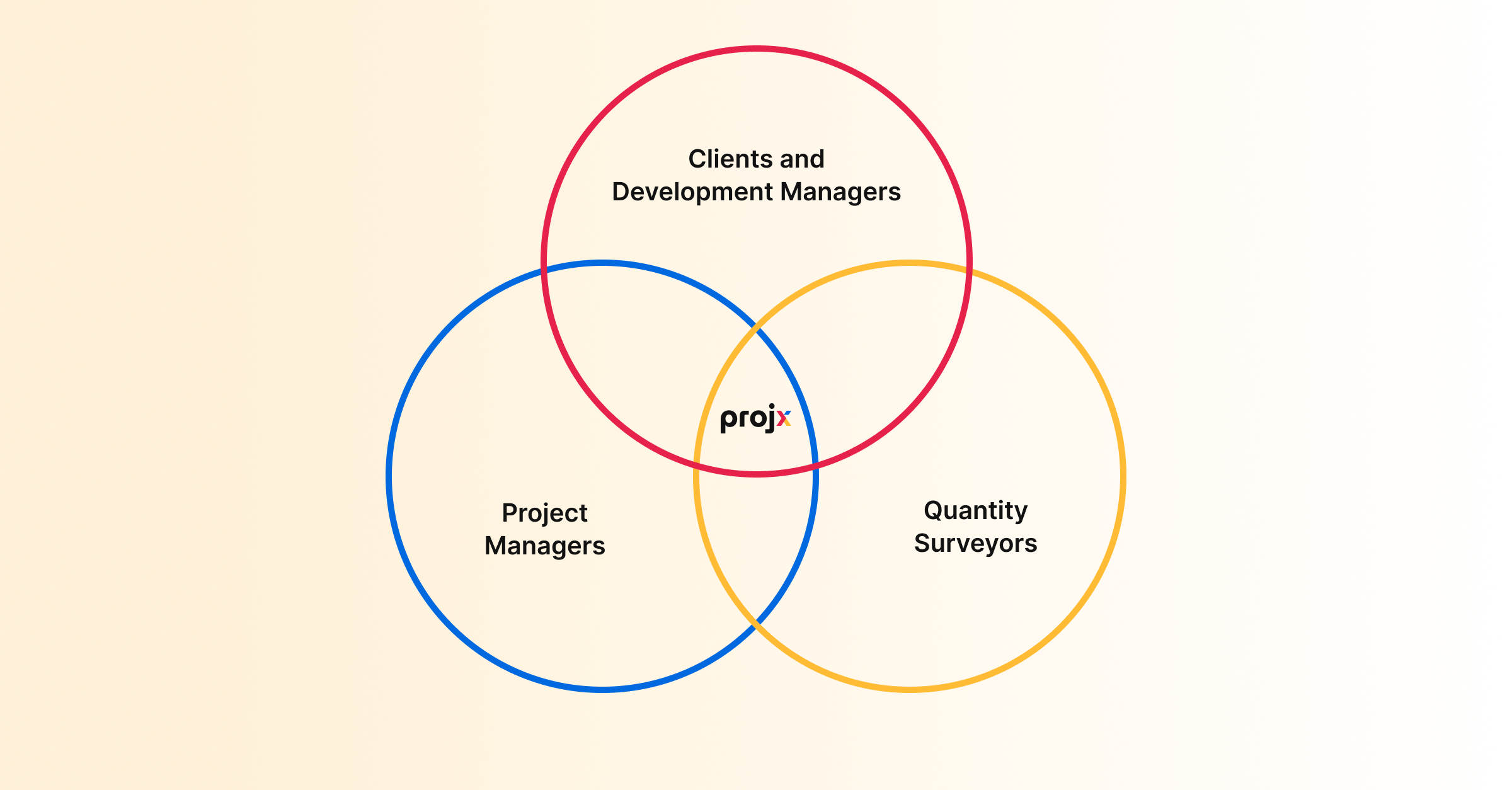
For some reason, there exists a ‘holy trinity’ in the client-sideproject team. It usually consists of the project manager, thequantity surveyor and the client themselves (or their representingdevelopment teams).
This team is critical to managing all project controls on the projectincluding time, cost, risk, scope, procurement and quality. They arealso responsible for managing the day-to-date delivery of the works.
Because of their omniscient role, these team members are provided an“all-access-pass” into the project details. They see the nittygritty details and the things that other team members are not privyto (like budgets and contingencies).
A client-side consultant team is there to align expertise around theClient’s goals. But if that expertise is scattered acrossspreadsheets, email chains, and endless PDF markups, misalignmentcreeps in.
That’s where Projx helps.
By unifying project data - costs, schedules, variations, andcommunication - Projx gives Clients, PMs, QSs, and the widerconsultant team a shared source of truth.
The result? Less admin, fewer crossed wires, and a clearer path todelivering what the Client actually wants.
Let’s take an example of a variation register for a Head Contract.
Instead of the key project team being on separate platforms inputtingthe same thing in different places, wouldn’t it make sense ifeveryone was just working off the same page?


© 2026 Copyright. All Rights Reserved.

